
Navigating Support Obligations
Understanding Spousal and Child Support
Guide to Support Obligations
Common Questions
Get answers to your pressing questions about spousal and child support obligations.
How is spousal support determined?
Spousal support is determined based on factors such as income, length of marriage, and roles during the marriage. Courts often refer to the Spousal Support Advisory Guidelines for guidance.
What factors affect child support payments?
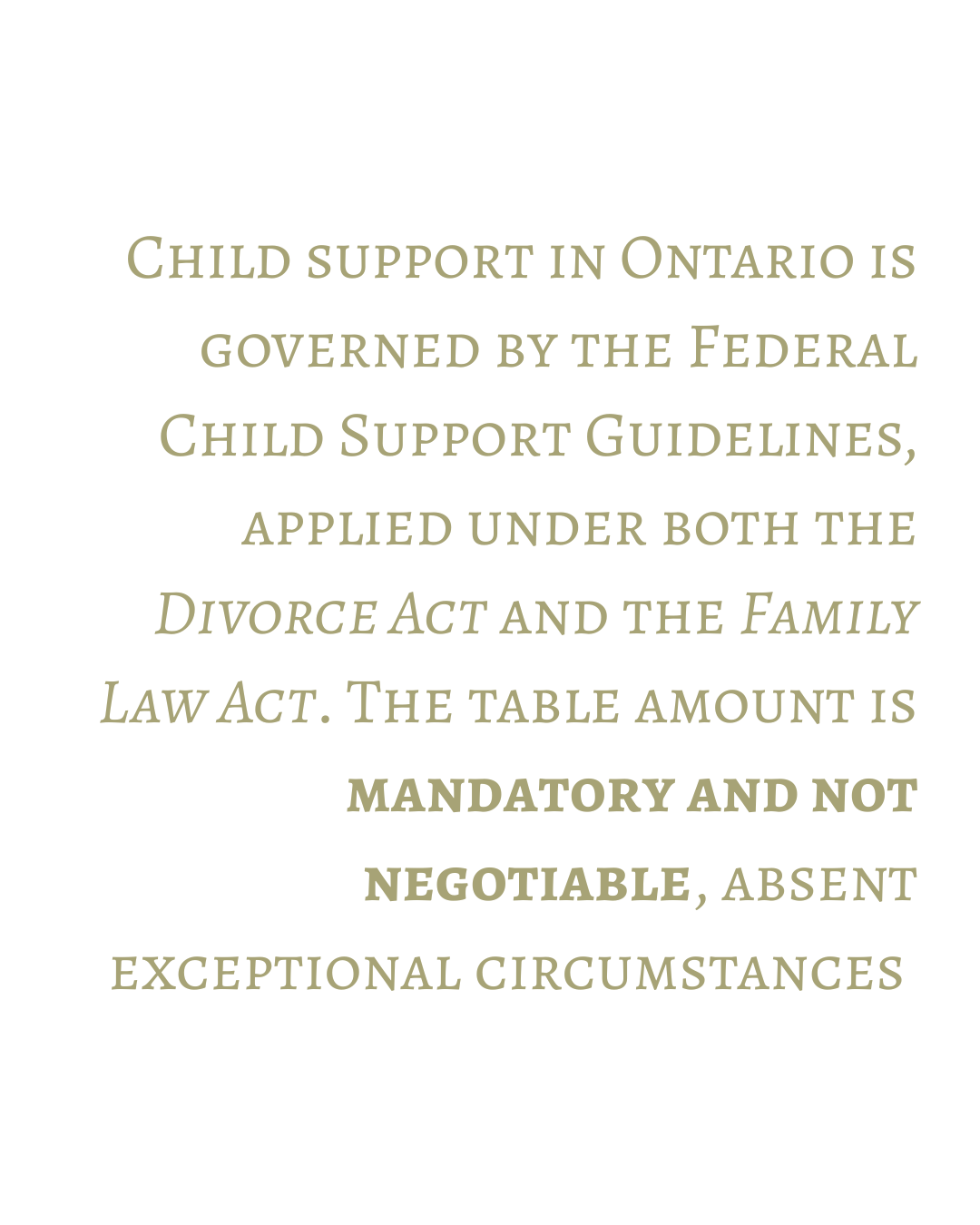
Child support payments are calculated using the Child Support Guidelines, which consider the payor’s income and the number of children involved.
Can support be modified?
Yes, support can be modified if there is a significant change in circumstances, such as a change in income or financial needs.
How does child support work if parenting time is shared?
In Ontario, shared custody occurs when each parent has the child at least 40% of the time (146 days/year). In these cases, child support isn’t just a simple set-off calculation—courts apply a combined approach, assessing each parent’s means and circumstances, along with their respective obligations under the Child Support Guidelines. This nuanced approach ensures support payments fairly reflect both parents’ income and actual parenting responsibilities.
Can I get paid child support from the past?
In Ontario, retroactive child support may be available if you’ve previously received inadequate or no support. Courts usually limit retroactive support to three years before this notice, but exceptions apply if the paying parent concealed income or acted improperly. Eligibility and calculations are complex, so consulting a family lawyer is strongly recommended.
What if my ex makes more than they claim?
If you suspect your ex-partner is underreporting their income to avoid child support obligations, Ontario courts can impute income—meaning they assign a higher income than claimed—to ensure support payments reflect true earning capacity. This often involves working closely with professionals such as forensic accountants or financial experts who help uncover hidden income or assets. It’s crucial to consult a family lawyer and financial professionals who can accurately assess your ex’s income, advocate effectively in court, and ensure you receive the child support you’re entitled to.
Key Considerations in Support Determination
Income and Financial Assets
Courts evaluate the income and financial resources of both spouses to determine fair support payments.
Duration of Marriage
The length of the marriage plays a crucial role in deciding the amount and duration of support.
Roles During Marriage
The contributions and roles each spouse had during the marriage, such as career sacrifices, are considered.
Childcare Responsibilities
How childcare duties are divided can impact the support calculations, especially in shared custody situations.
Spousal and Child Support Statistics
Understanding the numbers behind support cases can provide clarity and context.
cases saw arrears increase
In 2024, 49% of support recipients saw arrears increase—highlighting the urgent need for strong enforcement. Ensure you’re on the right side of this trend by taking proactive legal steps..
cases are in full compliance
In 2024, only 36% of support cases were fully compliant, leaving most families without full payments. Strong enforcement is key to ensuring children receive the support they need.
Our Legal Expertise
Spousal and Child Support Services
Spousal Support Consultation
We provide personalized consultations to help you understand your rights and obligations regarding spousal support.
Child Support Guidance
Our experts guide you through the complexities of child support, ensuring compliance with legal guidelines.
Support Modification Assistance
We assist in modifying existing support agreements to reflect changes in circumstances or income.
Enforcement of Support Orders
Our team helps enforce support orders, ensuring you receive the payments you are entitled to.
Mediation Services
We offer mediation services to amicably resolve support disputes outside of court.
Legal Representation
Our experienced attorneys provide robust representation in support-related court proceedings.
Secure Your Future with Expert Legal Guidance
Ensure your rights are protected and your family’s needs are met. Contact Round Table Legal Services today for a personalized consultation on spousal and child support. Our experienced team is here to guide you through every step with professionalism and care.